Deep Brain Reorienting
Brainstem-Level Trauma Processing

Deep Brain Reorienting
A powerful approach to trauma therapy that focuses on the deep brain structures involved in the most fundamental aspects of the self, helping individuals access and heal the core aloneness pain at the root of complex trauma.
Developed by Dr. Frank Corrigan

CEUs are being negotiated. Post-tests, certificates, and CE credit are not currently available.
Deep Brain Reorienting: A Brainstem-Based Approach to Trauma and Attachment Shock
Target Audience: Licensed mental health professionals (psychologists, clinical social workers, licensed professional counselors, marriage and family therapists)
Deep Brain Reorienting (DBR), developed by Dr. Frank Corrigan, is a novel trauma psychotherapy grounded in the neuroscience of the brain's innate response to shock and threat. Its theoretical foundation is built on the understanding that the upper brainstem, particularly the Superior Colliculus (SC), initiates a rapid, pre-conscious orienting response to surprising or threatening stimuli. DBR systematically tracks the Orienting-Shock-Affect (O-Sh-A) sequence: the initial orienting response (with its associated tension in the muscles around the head and neck), the pre-affective shock mediated by the locus coeruleus that occurs milliseconds before full emotional impact, and the subsequent activation of affect in deeper brain structures like the Periaqueductal Gray (PAG). This approach allows clinicians to work directly with the subcortical roots of traumatic memory.
The primary clinical application of DBR is in the treatment of attachment trauma and the profound 'aloneness pain' that accompanies it, though it is effective for a wide range of traumatic experiences. What makes DBR unique is its focus on the Orienting-Shock-Affect (O-Sh-A) sequence, which provides a neurobiological map for processing trauma at a brainstem level. Unlike therapies that rely heavily on cognitive narrative or emotional catharsis, DBR facilitates healing by gently guiding the client's awareness to this bodily sequence, allowing for the processing of visceral shock and pre-verbal terror without overwhelming the system. This makes it particularly useful for clients with significant dissociative responses.
DBR is an evidence-based modality with a growing body of research, including randomized controlled trials, supporting its efficacy. This module will deepen the clinician's understanding of the neurobiology of trauma, providing a framework for addressing the deepest layers of traumatic experience. Participants will learn how to identify and work with the O-Sh-A sequence, utilize techniques like the 'Where-Self' protocol to anchor the client, and understand the critical role of brainstem structures like the PAG and Nucleus Gigantocellularis (NGC) in both holding and releasing traumatic shock. This will equip clinicians to facilitate memory reconsolidation at a foundational, physiological level.
Upon completion of this module, the learner will be able to:
- 1Describe the neurobiological sequence of the Orienting-Shock-Affect (O-Sh-A) model in Deep Brain Reorienting.
- 2Identify the key brainstem structures, including the Superior Colliculus and Periaqueductal Gray (PAG), targeted during DBR processing.
- 3Differentiate the DBR approach to memory reconsolidation from traditional cognitive-based trauma therapies.
- 4Apply the 'Where-Self' protocol to anchor client awareness in the present moment during trauma processing.
- 5Analyze the concept of 'quadruple distress' in attachment trauma and its implications for DBR interventions.
CEUs are being negotiated. Post-tests, certificates, and CE credit are not currently available. The course overview and learning objectives are available now for educational use. Planned contact hours for this module: 3.5.
Featured Video
Linda Curran interviews Dr. Frank Corrigan, the developer of Deep Brain Reorienting (DBR), including an in-session clinical demonstration of the DBR process.
What is DBR?
DBR is a trauma therapy that emphasizes the importance of turning inwards to the Protoself to heal the injured self. The core principles are rooted in understanding the brainstem's role in organizing and orienting our experiences.
From Dr. Frank Corrigan
Official DBR WebsiteDeep Brain Reorienting (DBR) aims to access the core of the traumatic experience in a way which tracks the original physiological sequence in the brainstem, the part of the brain which is rapidly online in situations of danger or attachment disruption. There may be threat and attachment wounding together when, for example, an experience of abandonment in infancy activates age-appropriate fears for survival.
The first structure capable of initiating a movement response is the superior colliculus (SC), which can direct eye movements. The SC also prepares the head for turning by bringing in tension in the muscles of the neck. This orienting tension, although often fleeting and unnoticed, is a major component of DBR.
The focus in a DBR session on face and neck tension arising from turning attention to the memory of the traumatic event, or to whatever has been the present-day trigger, gives an anchor in the part of the memory sequence that occurred before the shock or emotional overwhelm that is leading to the continuing symptoms.
Deepening awareness into this orienting tension provides an anchor for grounding in the present so that the mind is neither swept away by the high intensity emotions, nor diverted into a compartment holding a self-state frozen in time in which contact with the present is lost.
Note: Although the theory is simple, the practice of DBR can be difficult. It does not work for everyone. Therapists who will find it most useful are those who use transformational trauma therapy approaches that are body-based, or "bottom-up". These approaches do not rely on restructuring of thoughts or meanings at a complex verbal level for "top-down" control of symptoms, nor do they rely on exposure for establishing cortical control of fear responses.
Targets the deep brain structures where our most fundamental responses to connection and disconnection are registered.
Addresses the deep, aversive experience of being alone and disconnected that often underlies complex trauma.
The therapist's attuned presence is neurobiologically active in the healing process, providing corrective experience.
See also: Window of Tolerance - a foundational concept across all trauma modalities.
The Protoself & Core Vitality
The Protoself is a foundational layer of the self, deeper than the core self described by Jaak Panksepp. It is a collection of neural patterns that map the most stable aspects of the organism's physical structure.
It is responsible for generating primordial feelings ~ the simplest variety of affect that springs up from the interior of the organism. These feelings have a valence, ranging from pleasure to pain.
Core vitality is the felt experience of force in movement, with a temporal contour and a sense of aliveness. DBR aims to help individuals connect with their Protoself and core vitality to heal the wounds of trauma.

"The Protoself is not a cognitive construct but rather a felt sense of being alive in a body."

The Pain of Disconnection
A central concept in DBR is the pain of disconnection ~ the aversive experience of the absence of an attachment figure. This pain is not just emotional but is felt physically in the body.
The absence of a caregiver is perceived as a "presence of absence" ~ a deprivation that leaves a sense of emptiness and hollowness. This experience can be so unbearable that the brain develops various ways to turn away from it or anesthetize it.
Quadruple Distress in Infancy:
- Visceral Shock
- Emotional Pain
- Somatized Pain
- Panic and Terror
Neuroscience
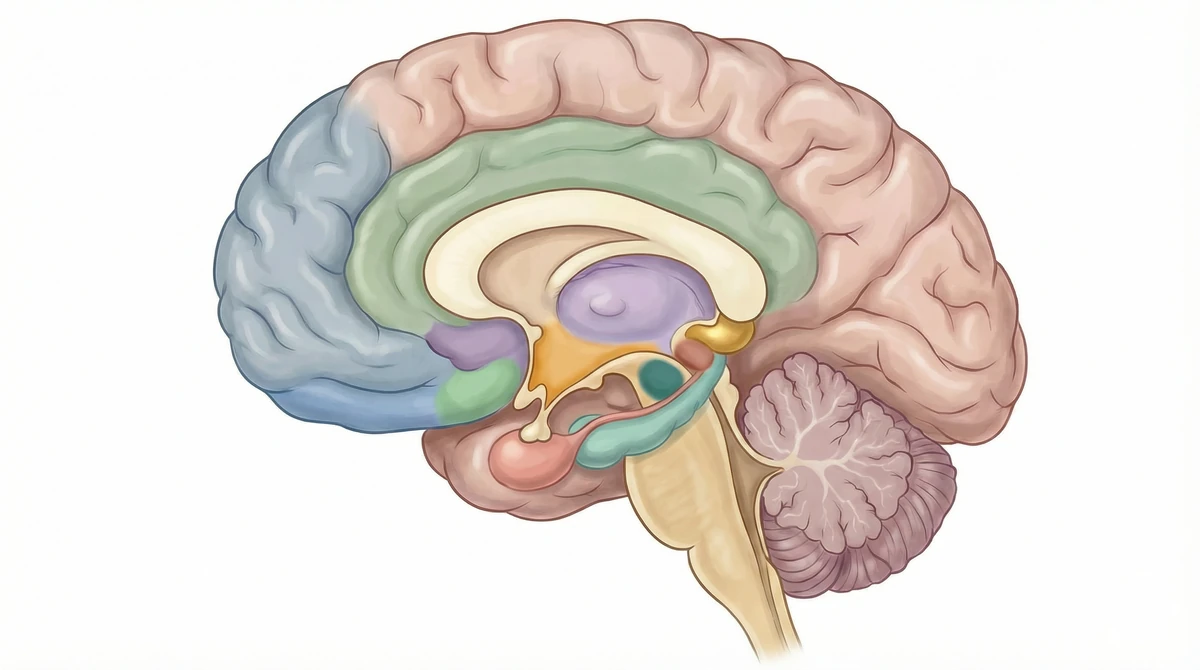
DBR is grounded in a sophisticated understanding of the neuroanatomy and neurophysiology of the brainstem and midbrain.
Brain Regions Targeted by DBR
Click on any brain region to explore how DBR engages it during processing.
Six steps from stimulus to integration ~ the orienting tension is the therapeutic anchor· Click any step for clinical details
Stimulus / Trigger
Traumatic memory or present-day trigger
The client brings attention to a traumatic memory or present-day trigger that activates the trauma response ~ without fully immersing in it.
Superior Colliculus Activation
Directs eye movement toward stimulus
The first brain structure capable of initiating a movement response. It directs eye movements toward the stimulus and prepares the head for turning ~ often faster than conscious awareness.
Orienting Tension
Tension in neck muscles, forehead, around eyes
The physical manifestation of the SC preparing the body to orient. This tension ~ in muscles around the eyes, forehead, and skull base ~ is the key therapeutic entry point in DBR.
Therapeutic Anchor Point
Focus here BEFORE shock / overwhelm
The critical intervention point. By focusing on orienting tension ~ which occurred before the shock ~ the client has an anchor that prevents being swept away by high-intensity emotions or dissociation.
Shock / Affect Emerges
Visceral response from PAG / NGC
With the anchor established, visceral shock markers emerge safely: stomach drop, hollowing, chills, pressure behind the eyes, electrical charges. The 'stomach drop' comes as cold shock from the dorsal PAG.
Processing & Integration
With therapist presence
The therapist's attuned presence activates oxytocin-mediated connection systems that counteract core aloneness. The goal is an organic shift in self-perception through memory reconsolidation.
"The orienting tension provides an anchor for grounding in the present"
Detailed explanations, clinical notes, and Dr. Corrigan quotes for each step
Key Therapeutic Insight
The orienting tension (Step 3) provides an anchor for grounding in the present so that the mind is neither swept away by high-intensity emotions, nor diverted into a compartment holding a self-state frozen in time in which contact with the present is lost.
Keep this guide free.
DBR Treatment Methods
DBR utilizes a specific sequence of steps to help clients process trauma and reconnect with their core self. The clinical flow begins with establishing the Where-Self, then moves through the O-Sh-A sequence.
Before any trauma processing begins, the clinician establishes the client's embodied sense of self in the present moment. This protocol helps clients access a deeper sense of self and core vitality before approaching traumatic material.
Establish the Where-Self
Guide the client to connect with their sense of their body in space, in the present moment.
Turn Attention Inwards to the Protoself
Guide the client to turn attention inwards, to the basic sense of being in a body and the core energy of their being.
Introduce the Activating Stimulus
While in this state of connection with the Protoself, the activating stimulus is introduced.
Identify the Orienting Tension
The client is asked to notice the orienting tension that arises in response to the stimulus.
Process the Traumatic Memory
The therapist facilitates processing by guiding the client to stay with the orienting tension and associated shock, pain, and affect.
The O-Sh-A Sequence
Once the Where-Self is established, the core of DBR processing is the Orienting-Shock-Affect (O-Sh-A) sequence. The therapist helps the client access the orienting response and its associated tension, then identify the pre-affective shock that occurs milliseconds before full emotional impact, and finally process the affect and pain mediated by the PAG. See the DBR Sequence Timeline above for the full 6-step clinical walkthrough.
Orienting
Access the orienting response and its associated tension in forehead, eyes, or skull base
Shock
Identify the pre-affective shock (locus coeruleus) that occurs before full emotional impact
Affect
Process the raw, visceral emotions (PAG) that follow until intensity decreases

Mechanisms of Dissociation
DBR identifies four distinct mechanisms of dissociation, each requiring different therapeutic responses. Recognizing these during treatment is essential for effective intervention.
Mechanism
Unconscious turning away at the midbrain level
Presentation
Client 'checks out' or disowns experience
Therapeutic Response
Return to orienting tension as anchor
Mechanism
Disconnection within the cortex
Presentation
Derealization, depersonalization
Therapeutic Response
Ground in body sensations
Mechanism
Endogenous cannabinoids
Presentation
Numbness, detachment despite high arousal
Therapeutic Response
Release breathing (long, slow out-breaths)
Mechanism
Endogenous opioids
Presentation
Drowsiness, fatigue, feeling cold
Therapeutic Response
Therapist's presence (NOT release breathing)
Critical Distinction
For high arousal dissociation, use release breathing to bring down arousal. For low arousal dissociation, do NOT use release breathing as it will deepen the withdrawn state. Instead, the therapist's attuned presence is the primary intervention.
Working with Complex Trauma
DBR was developed specifically to address the deep brainstem-level wounds of complex trauma. However, working with developmental trauma and attachment wounding requires additional considerations beyond single-incident trauma processing.
Complex trauma clients often have a fragmented sense of self. Spend significant time establishing connection with the Protoself and core vitality before approaching traumatic material.
- Build stable Where-Self awareness first
- Establish reliable access to core vitality
- Practice O-Sh-A sequence with non-trauma material
Working with Core Aloneness Pain
The core aloneness pain at the heart of attachment trauma is often the most difficult material to approach. This is the "presence of absence"~ the felt sense of the caregiver not being there.
Signs of Core Aloneness
- • Deep emptiness or hollowness
- • Sense of "nobody there" internally
- • Existential loneliness despite connection
- • Visceral dread when approaching intimacy
Therapeutic Approach
- • Therapist presence is the primary intervention
- • Stay with the pain without trying to fix it
- • Allow the "quadruple distress" to emerge slowly
- • Use your attuned presence as corrective experience
Structural Dissociation Considerations
Complex trauma often results in structural dissociation ~ the personality organized into parts that hold different aspects of traumatic experience. DBR can work with this through careful attention to which "self" is present.
Working with Parts
- Identify the self-state: Notice which part is orienting to the stimulus
- Collicular self: The orienting tension may belong to a younger self-state
- Frozen states: Some parts may be stuck in time ~ approach with care
- Adult self: Ensure the adult self maintains connection during processing
Key Clinical Insight
With complex trauma, the therapist's presence is not just supportive ~ it is neurobiologically active. Your attuned presence activates oxytocin-mediated connection systems that directly counteract the core aloneness pain. The relationship IS the treatment.
Complementary Approaches
DBR integrates well with other trauma modalities. Each approach offers unique contributions to complex trauma work:
EMDR
Bilateral processing for memory reconsolidation
Sensorimotor
Body-based processing and movement
Gestalt
Relational presence and dialogue
Somatic Experiencing
Titration and nervous system regulation
Internal Family Systems
Parts work and Self-leadership
Neurofeedback
Brain wave training for regulation
Complex Trauma Comparison Chart
A comprehensive guide comparing when to use each modality's specific complex trauma modifications. Includes clinical decision trees, sequencing considerations, and at-a-glance comparison tables.
Session Language
Therapeutic language from Dr. Corrigan for each phase of DBR
Glossary of DBR Terms
Quick reference definitions for key concepts, brain structures, and clinical techniques used in Deep Brain Reorienting.
DBR Quick Reference Card
A comprehensive PDF with essential terms, session prompts, shock markers, and a quick-reference table for clinical use.
Further Reading
Explore the scientific foundations of DBR and memory reconsolidation through these peer-reviewed papers and foundational texts.
Deep Brain Reorienting Research
A randomized controlled trial of Deep Brain Reorienting: a neuroscientifically guided treatment for post-traumatic stress disorder
Kearney, B.E., Corrigan, F.M., Frewen, P.A., et al. • European Journal of Psychotraumatology (2023)
First RCT evaluating DBR effectiveness, showing significant decreases in PTSD symptoms after eight internet-based sessions.
Full Text PDFDeep Brain Reorienting: Understanding the Neuroscience of Trauma, Attachment Wounding, and DBR Psychotherapy
Corrigan, F.M., Young, H., Christie-Sands, J. • Routledge (2024)
Comprehensive book on DBR theory and practice, building on neuroscience of shock, trauma, and neglect at the deepest brain levels.
An innate brainstem self-other system involving orienting, affective responding, and polyvalent relational seeking: Some clinical implications for a 'Deep Brain Reorienting' trauma psychotherapy approach
Corrigan, F.M., Christie-Sands, J. • Medical Hypotheses (2020)
Proposes that the most basic urge to connect depends on circuits in the superior colliculi, PAG, and mesolimbic dopamine systems ~ foundational to DBR theory.
Full Text PDFThe Psychopathological Domains of Attachment Trauma: A Commentary
Corrigan, F.M. • Clinical Neuropsychiatry (2025)
Commentary on how attachment traumas result from alterations in midbrain mechanisms of orientation and affective regulation, with implications for DBR treatment.
Full Text PDFMemory Reconsolidation
Memory Reconsolidation Understood and Misunderstood
Ecker, B. • International Journal of Neuropsychotherapy (2015)
Clarifies common misconceptions about memory reconsolidation research and its clinical applications.
Full Text PDFMemory Reconsolidation Interference as an Emerging Treatment for Emotional Disorders
Beckers, T., Kindt, M. • Clinical Psychological Science (2017)
Reviews advantages of reconsolidation-based interventions over traditional treatments for emotional disorders.
Full Text PDFFoundational Neuroscience
Restoring large-scale brain networks in PTSD and related disorders
Lanius, R.A., Frewen, P.A., Tursich, M., et al. • European Journal of Psychotraumatology (2015)
Proposes neuroscientifically-informed treatment interventions for restoring brain network function in PTSD.
Full Text PDFEmotion modulation in PTSD: Clinical and neurobiological evidence for a dissociative subtype
Lanius, R.A., Vermetten, E., et al. • American Journal of Psychiatry (2010)
Landmark paper establishing the dissociative subtype of PTSD with distinct neurobiological patterns.
Full Text PDFOfficial DBR Resources
For training opportunities, clinical resources, and the latest research updates, visit the official Deep Brain Reorienting website maintained by Dr. Frank Corrigan.
Visit deepbrainreorienting.com