
Psychedelic-Assisted Psychotherapy
Combining psychedelic medicines with skilled psychotherapy to facilitate breakthrough healing experiences. Developed through rigorous clinical research by MAPS, Johns Hopkins, Imperial College, and other leading institutions.
Developed by MAPS, Johns Hopkins, Imperial College & others (2000s-present)

CEUs are being negotiated. Post-tests, certificates, and CE credit are not currently available.
Psychedelic-Assisted Therapy for Trauma: Clinical Applications and Integration
Target Audience: Licensed mental health professionals (psychologists, clinical social workers, licensed professional counselors, marriage and family therapists)
Psychedelic-assisted therapy (PAT) represents a paradigm shift in mental health treatment, re-emerging from a rich history of indigenous use and mid-20th-century psychiatric research. This modality combines the administration of specific psychoactive substances with structured psychotherapy to facilitate profound psychological and emotional healing. The theoretical foundation of PAT rests on the principle that these substances, when used within a safe and supportive therapeutic container, can catalyze access to non-ordinary states of consciousness. These states can help individuals revisit and process traumatic memories, gain novel insights into their intrapsychic worlds, and foster a sense of interconnectedness, thereby resolving core aspects of trauma-related psychopathology. The approach emphasizes the concept of an 'inner healing intelligence,' empowering the client's own capacity for recovery.
The clinical applications of PAT are rapidly expanding, with the most robust evidence centered on MDMA-assisted therapy for post-traumatic stress disorder (PTSD), which has received Breakthrough Therapy designation from the FDA. This protocol, developed by the Multidisciplinary Association for Psychedelic Studies (MAPS), involves a limited number of medication sessions embedded within a broader psychotherapeutic framework. What makes this approach unique for trauma treatment is its ability to decrease fear and defensiveness while increasing empathy and introspection, allowing clients to engage with traumatic material without being overwhelmed. Similarly, psilocybin therapy is showing promise for treatment-resistant depression and existential distress, while ketamine-assisted therapy is utilized for its rapid antidepressant effects and its ability to create a 'neuroplasticity window' for therapeutic change. The emphasis on comprehensive preparation sessions and post-session integration is a hallmark of this work, differentiating it from recreational substance use.
A growing body of evidence from rigorous clinical trials supports the safety and efficacy of PAT for various conditions. This module will deepen the clinician's understanding of the neurobiological underpinnings of these treatments, including the disruption of the brain's default mode network (DMN), which is often overactive in conditions like PTSD and depression. By temporarily reducing the DMN's influence, psychedelics may allow for the formation of new neural pathways and psychological perspectives. Participants will learn about the critical safety protocols, contraindications, and ethical considerations essential for responsible practice. This course will equip clinicians with the foundational knowledge to understand the therapeutic potential of PAT, navigate the current research landscape, and prepare for the future integration of these powerful tools into clinical practice.
Upon completion of this module, the learner will be able to:
- 1Describe the theoretical foundations, historical context, and core therapeutic principles of psychedelic-assisted therapy.
- 2Differentiate the primary clinical applications, mechanisms of action, and treatment protocols for MDMA, psilocybin, and ketamine-assisted therapies.
- 3Explain the critical roles of 'set and setting,' the therapeutic container, and non-directive support in ensuring patient safety and optimizing outcomes.
- 4Analyze the neurobiological concepts of default mode network (DMN) disruption and the 'neuroplasticity window' as they relate to therapeutic change in PAT.
- 5Identify key safety protocols, contraindications, and ethical considerations for the responsible clinical application of psychedelic medicines in trauma treatment.
CEUs are being negotiated. Post-tests, certificates, and CE credit are not currently available. The course overview and learning objectives are available now for educational use. Planned contact hours for this module: 4.5.
Featured Video
An overview of MDMA-assisted psychotherapy for trauma treatment, exploring the clinical research and therapeutic framework.
Overview
Understanding Psychedelic-Assisted Psychotherapy
Psychedelic-Assisted Psychotherapy (PAP) combines the administration of psychedelic substances with psychotherapeutic support to facilitate profound healing experiences. Unlike traditional pharmacotherapy where medication is taken regularly, psychedelics are administered in a limited number of sessions within a carefully structured therapeutic container.
Psychedelics have been used in healing contexts for thousands of years across indigenous cultures. Modern clinical research began in the 1950s-60s, showing promising results for depression, anxiety, and addiction before political pressures led to Schedule I classification in 1970.
The "psychedelic renaissance" began in the 2000s with renewed research at institutions like Johns Hopkins, NYU, and Imperial College. MAPS (Multidisciplinary Association for Psychedelic Studies) has led the effort to gain FDA approval for MDMA-assisted therapy for PTSD, with Phase 3 trials showing remarkable efficacy.
- Medicine as catalyst, not standalone treatment
- Trust in the inner healing intelligence
- Set and setting are as important as the medicine
- Integration is essential for lasting change
- MDMA: FDA Breakthrough Therapy designation for PTSD
- Psilocybin: Breakthrough Therapy for depression
- Ketamine: FDA approved (esketamine) for depression
- Legal in Oregon, Colorado, Australia for supervised use
"The psychedelic experience is not a drug experience. It's a human experience that's been facilitated by the drug."
~ Rick Doblin, PhD, Founder of MAPS
Substances
Medicines used in psychedelic-assisted therapy. Note: Many other substances (LSD, DMT, ibogaine, ayahuasca, etc.) are being studied; these three are the most notable and furthest along in clinical research.
Neuroscience
How psychedelics facilitate therapeutic change at the neural level.
Serotonin & Dopamine Release
MDMA triggers massive release of serotonin, dopamine, and norepinephrine, creating feelings of wellbeing, connection, and emotional openness.
Oxytocin Release
Promotes trust, bonding, and social connection ~ particularly important for processing relational trauma and attachment wounds.
Reduced Amygdala Reactivity
Decreases the fear response, allowing clients to approach traumatic memories without overwhelming activation.
Reopened Critical Period
Research suggests MDMA may reopen social reward learning critical periods, allowing for new relational learning.
Enhanced Fear Extinction
Facilitates the brain's natural fear extinction processes, helping to update traumatic memories.
Memory Reconsolidation Window
Creates optimal conditions for memory reconsolidation, allowing traumatic memories to be updated with new information.
Default Mode Network Disruption
Reduces activity in the DMN ~ associated with self-referential thinking and rumination ~ allowing for new perspectives on self and experience.
Increased Neural Connectivity
Creates temporary hyperconnectivity between brain regions that don't normally communicate, enabling novel insights and perspectives.
Emotional Breakthrough Experiences
Facilitates access to difficult emotions and memories in a context of expanded awareness and reduced defensiveness.
Neurogenesis Promotion
May promote growth of new neural connections and enhance brain plasticity through BDNF and other growth factors.
Decreased Amygdala Reactivity
Similar to MDMA, reduces fear-based responding and allows for approach rather than avoidance of difficult material.
Mystical Experience Correlation
The degree of mystical experience correlates with therapeutic outcomes ~ suggesting meaning-making is central to healing.
NMDA Receptor Antagonism
Blocks NMDA glutamate receptors, disrupting habitual neural patterns and creating a window for new learning and perspective shifts.
Rapid Antidepressant Effect
Produces rapid antidepressant effects within hours ~ unlike traditional antidepressants that take weeks ~ through glutamate system modulation.
BDNF & Synaptogenesis
Triggers release of Brain-Derived Neurotrophic Factor (BDNF) and promotes rapid growth of new synaptic connections.
Default Mode Network Effects
Alters DMN activity, reducing rigid self-referential thinking and allowing for psychological flexibility and new perspectives.
Dissociative State
Creates a dissociative state that can provide distance from traumatic material, allowing observation without overwhelm.
Opioid System Interaction
Partial involvement of opioid receptors may contribute to emotional pain relief and sense of wellbeing during sessions.
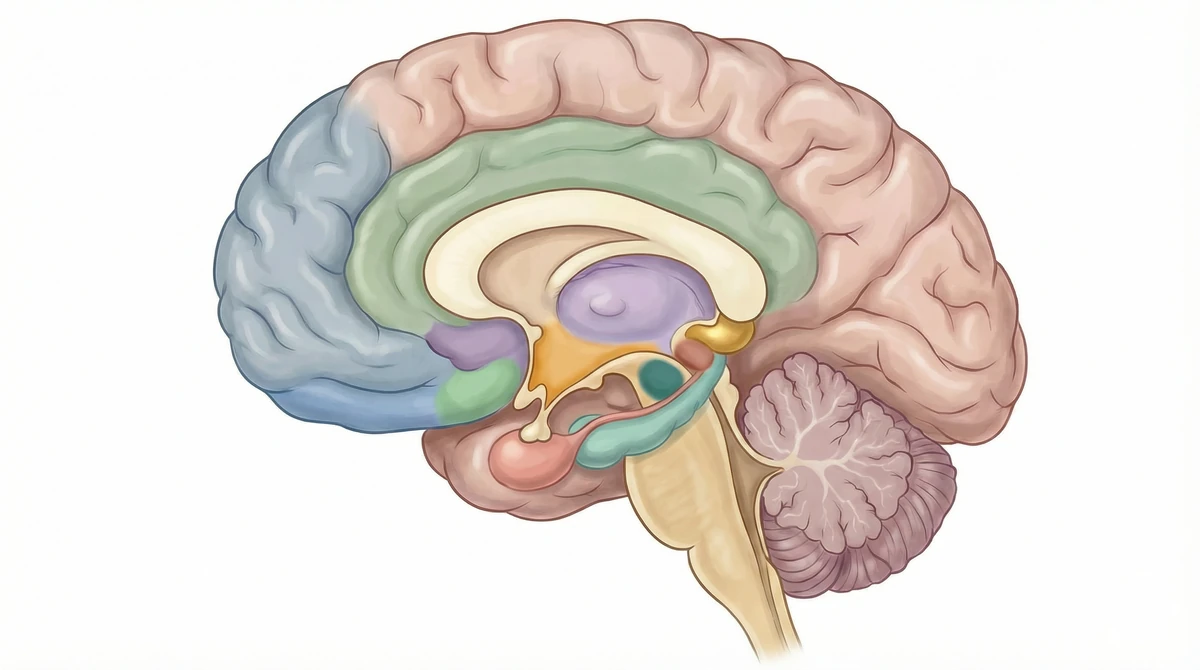
Brain Regions Affected
Understanding the brain regions affected by psychedelic compounds helps clinicians appreciate how these substances facilitate therapeutic change at the neural level.
Brain Regions Affected by Psychedelic-Assisted Therapy
Click on any brain region to explore how psychedelic compounds affect neural processing.
Keep this guide free.
Research Protocols & Treatment Models
Major research programs and their therapeutic approaches
Multiple research institutions have developed distinct protocols for psychedelic-assisted therapy. While sharing core principles ~ preparation, supported medicine sessions, and integration ~ each program has unique emphases shaped by the substance used and theoretical orientation.
Common Elements Across Protocols
Preparation
Building alliance, setting intentions, psychoeducation, screening
Supported Session
Safe setting, trained facilitators, music, minimal intervention
Integration
Making meaning, translating insights into life changes
| Protocol | Substance | Dose | Sessions | Therapist Ratio | Primary Focus |
|---|---|---|---|---|---|
| MAPS | MDMA | 80-120mg + 40-60mg booster | 3 medicine + 12 therapy | 2:1 (male/female dyad) | PTSD |
| Johns Hopkins | Psilocybin | 20-30mg/70kg | 1-2 medicine + 6-8 therapy | 2:1 | Depression, Addiction, End-of-life |
| Imperial College | Psilocybin | 10-25mg | 1-2 medicine + 4-6 therapy | 1-2:1 | Depression (REBUS model) |
| KAP (Various) | Ketamine | 0.5-1mg/kg IV or 200-400mg SL | 6 medicine + variable therapy | 1:1 | Depression, Anxiety, PTSD |
| NYU Langone | Psilocybin | 0.3mg/kg | 1 medicine + 9 therapy | 2:1 | Cancer-related distress |
| COMPASS Pathways | Psilocybin (COMP360) | 25mg | 1 medicine + minimal therapy | 1:1 | Treatment-resistant depression |
| Usona Institute | Psilocybin (naturalistic) | 25mg | 1 medicine + prep/integration | 1-2:1 | Major Depressive Disorder |
Treatment Phases in Detail
Deep dive into each phase of treatment
Set & Setting
The foundation of safe and effective psychedelic therapy
Intentions
Clear, personally meaningful intentions guide the experience and provide an anchor during difficult moments.
Psychological Preparation
Understanding what to expect, building coping strategies, and addressing fears before the session.
Therapeutic Alliance
Strong, trusting relationship with therapists is foundational ~ clients must feel safe to surrender to the experience.
Openness to Experience
Willingness to approach whatever arises with curiosity rather than resistance or control.
Trust in the Process
Confidence that the medicine and therapeutic container will support healing, even through difficult passages.
Comfortable Environment
A warm, aesthetically pleasing space with comfortable furniture, soft lighting, and natural elements.
Eyeshades and Music
Eyeshades encourage internal focus; carefully curated music supports emotional processing and journey phases.
Minimal Stimulation
Reduced external input allows for deeper internal exploration and prevents distraction.
Two Therapists Present
Male-female therapy dyad provides relational safety and diverse support options.
Safety Protocols
Medical monitoring, emergency procedures, and clear communication protocols ensure physical and psychological safety.
Session Language
Therapeutic language for each phase of treatment
Complex Trauma Considerations
Adaptations for developmental and relational trauma
- More sessions to establish therapeutic alliance
- Extensive work on grounding and self-regulation
- Assessment and strengthening of window of tolerance
- Careful attention to attachment patterns in therapy relationship
- Pre-session assessment of dissociative tendencies
- Grounding protocols for dissociative episodes
- Therapist training in recognizing and responding to dissociation
- Slower titration and more frequent check-ins
- Two-therapist model provides relational safety
- Therapists trained in attachment-informed approaches
- Attention to transference and therapeutic relationship
- Extended integration for relational insights
- EMDR for processing specific traumatic memories
- Somatic Experiencing for nervous system regulation
- IFS for parts work during preparation and integration
- DBR for brainstem-level trauma responses
EMDR
Processing specific memories during integration
Somatic Experiencing
Working with body sensations that emerge
IFS
Parts work during preparation and integration
DBR
Addressing brainstem-level trauma responses
Neurofeedback
Stabilizing nervous system before and after
Sensorimotor
Completing defensive movements in integration
Contraindications & Safety
Critical safety information for practitioners
Legal & Ethical Status
Current regulatory landscape
| Jurisdiction | Status | Notes |
|---|---|---|
| United States (Federal) | Schedule I controlled substance | MDMA and psilocybin remain Schedule I; FDA approval pathway in progress for MDMA-AT |
| Oregon | Legal for supervised use (psilocybin) | Measure 109 (2020) created framework for licensed psilocybin services; operational 2023 |
| Colorado | Legal for supervised use | Proposition 122 (2022) decriminalized and created pathway for regulated access |
| Australia | Legal for medical use | TGA approved MDMA and psilocybin for psychiatric use by authorized prescribers (2023) |
| Canada | Special Access Program | Available through SAP for treatment-resistant conditions; expanded access for end-of-life |
Important Ethical Considerations
- • Psychedelic therapy should only be provided within legal frameworks
- • Underground therapy carries significant risks for both practitioners and clients
- • Proper training and supervision are essential for safe practice
- • Informed consent must include discussion of legal status and risks
Glossary
Key terms and definitions
Research, Resources & Training
Clinical trial results, further learning, and professional development
Research Evidence
Phase 3 Trial Results
88% of participants showed clinically significant improvement; 67% no longer met PTSD criteria after treatment (Mithoefer et al., 2021)
Effect Size
Large effect sizes (Cohen's d > 0.9) compared to placebo with therapy
Durability
Treatment gains maintained at 12-month follow-up
Treatment-Resistant Cases
Effective for participants who had not responded to previous treatments
FDA Status
Breakthrough Therapy Designation granted; New Drug Application under review
Treatment-Resistant Depression
Significant and rapid reductions in depression symptoms (Carhart-Harris et al., 2021)
Cancer-Related Anxiety
Lasting reductions in anxiety and depression in cancer patients (Griffiths et al., 2016)
Addiction
Promising results for alcohol and tobacco cessation (Johnson et al., 2014; Bogenschutz et al., 2022)
Mechanism
Degree of mystical experience correlates with therapeutic outcomes
FDA Status
Breakthrough Therapy Designation for treatment-resistant depression
Rapid Antidepressant Effects
Significant reduction in depressive symptoms within hours of infusion, compared to weeks for traditional antidepressants (Berman et al., 2000; Zarate et al., 2006)
Treatment-Resistant Depression
Response rates of 50-70% in patients who failed multiple antidepressant trials (Murrough et al., 2013; Singh et al., 2016)
Suicidal Ideation
Rapid reduction in suicidal thoughts within 24 hours, with effects lasting up to 1 week (Wilkinson et al., 2018; Grunebaum et al., 2018)
PTSD
Significant PTSD symptom reduction in repeated infusion protocols (Feder et al., 2014; Feder et al., 2021)
Mechanism
NMDA receptor antagonism promotes rapid synaptogenesis and neural plasticity via BDNF and mTOR pathways (Duman & Aghajanian, 2012)
FDA Status
Esketamine (Spravato) FDA-approved for treatment-resistant depression (2019) and major depressive disorder with suicidal ideation (2020)