
Neuroscience of Trauma Processing
Why the same modality works differently for different clients ~ and why assessment comes first.
Key framework: Menon (2011); Lanius et al. (2015)
CEUs are being negotiated. Post-tests, certificates, and CE credit are not currently available.
Neuroscience of Trauma Processing: Networks, Modulation, and Assessment
Target Audience: Licensed mental health professionals (psychologists, clinical social workers, licensed professional counselors, marriage and family therapists)
The triple-network model organizes large-scale brain function around the Default Mode Network (DMN), Central Executive Network (CEN), and Salience Network (SN). The DMN supports self-referential and autobiographical processing, the CEN supports working memory and goal-directed cognition, and the SN evaluates relevant internal and external information while coordinating shifts between internally and externally focused processing. Trauma-related symptoms can involve altered activation and connectivity within and between these networks, but group-level neuroimaging findings should not be treated as an individual diagnostic scan.
PTSD presentations are not neurobiologically uniform. Classic PTSD is commonly associated with under-modulation: reduced prefrontal inhibition alongside greater limbic and threat-system activation. The DSM-5 dissociative subtype is associated with a contrasting over-modulation pattern in which prefrontal regulatory activity may suppress limbic and interoceptive responses, contributing to depersonalization, derealization, emotional numbing, or disconnection from bodily experience. These patterns are clinically useful distinctions, not binary labels that replace careful assessment. ICD-11 includes Complex PTSD, whereas DSM-5 recognizes a PTSD dissociative subtype rather than a Complex PTSD diagnosis.
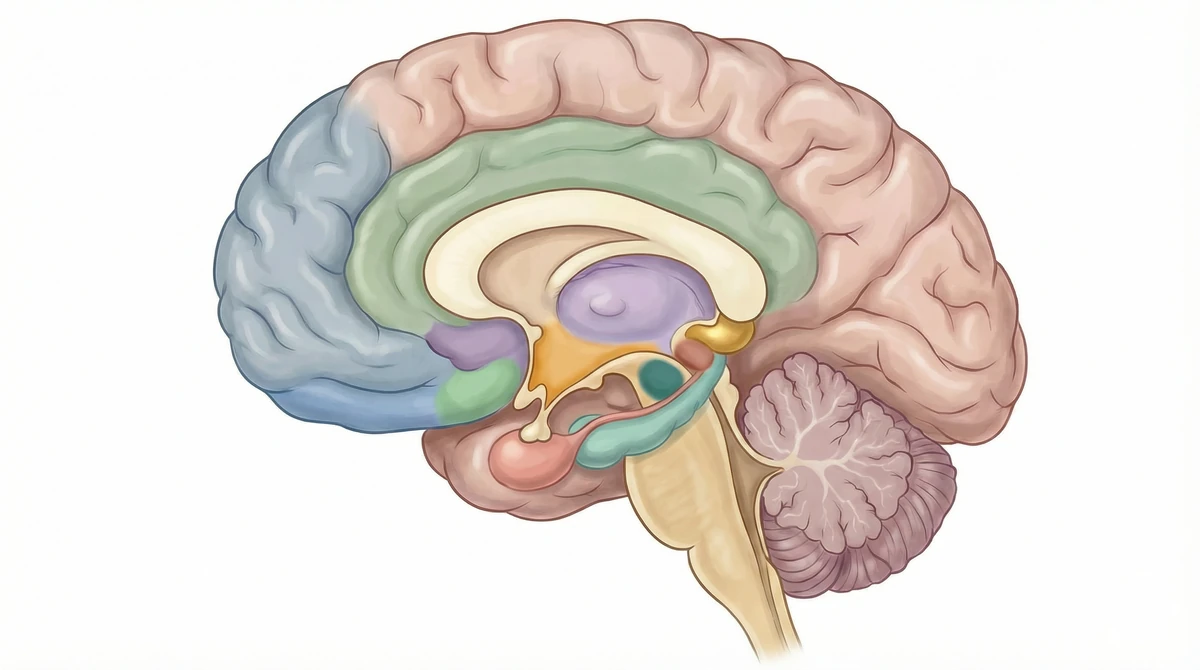
The theory of structural dissociation offers a complementary clinical model through the Apparently Normal Personality (ANP) and Emotional Part (EP), describing tensions between daily-life functioning and trauma-linked defensive systems. The defense cascade and interactive brain map help clinicians consider threat detection, contextual memory, interoception, executive control, and brainstem defense responses. Treatment planning should begin with the client’s current state and capacity rather than a preferred technique. Proposed mappings between modalities and networks are heuristic; they do not prove that a modality has one exclusive neural target or that every client will respond in the same way.
Upon completion of this module, the learner will be able to:
- 1Describe the primary functions and core regions of the Default Mode, Central Executive, and Salience Networks.
- 2Differentiate under-modulated classic PTSD from the over-modulated DSM-5 dissociative subtype.
- 3Explain how prefrontal, amygdala, insula, hippocampal, and brainstem activity can inform trauma case formulation.
- 4Compare the ANP and EP patterns in the theory of structural dissociation without treating them as direct neuroimaging diagnoses.
- 5Apply an assessment-first approach while interpreting modality-to-network mappings as hypotheses rather than proven exclusive mechanisms.
CEUs are being negotiated. Post-tests, certificates, and CE credit are not currently available. The course overview and learning objectives are available now for educational use. Planned contact hours for this module: 2.
Key Takeaway for Clinicians
A client's difficulty is not evidence that one network is "off" and another is "stuck." Large-scale network models help organize group-level findings about salience, self-related processing, and cognitive control. They do not replace clinical assessment or identify a single mechanism of change for an individual client.
The Three Networks
The triple-network model highlights three large-scale systems implicated across many psychiatric conditions. These networks contribute to salience, self-related processing, and cognitive control; they do not account for all cognition, emotion, or behavior.
Self-related and internally directed processing
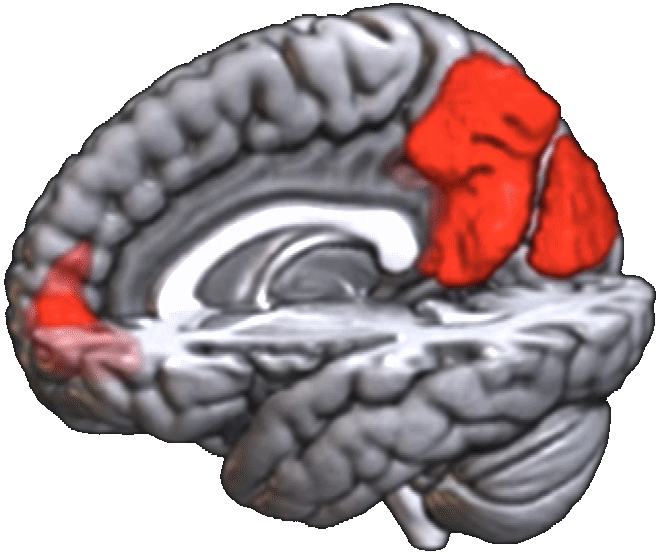
Active at rest: inner monologue, daydreaming, recalling memories, thinking about the future.
Key regions: Medial PFC, Posterior Cingulate Cortex
Working memory and goal-directed control
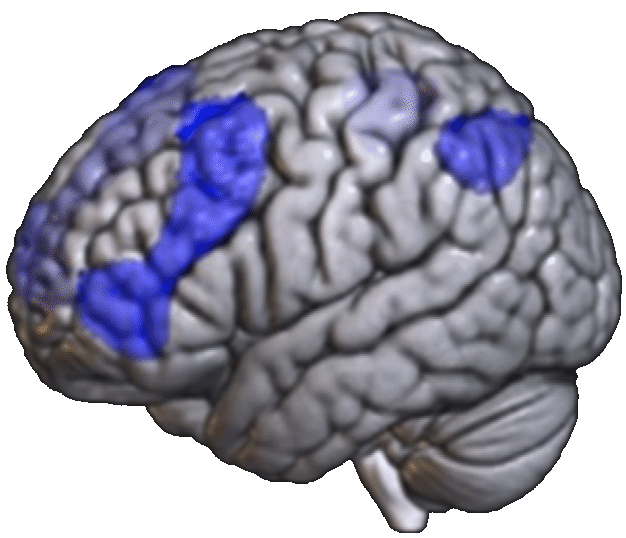
Active during focus: solving problems, making decisions, managing working memory.
Key regions: Dorsolateral PFC, Posterior Parietal Cortex
Salience detection and network coordination
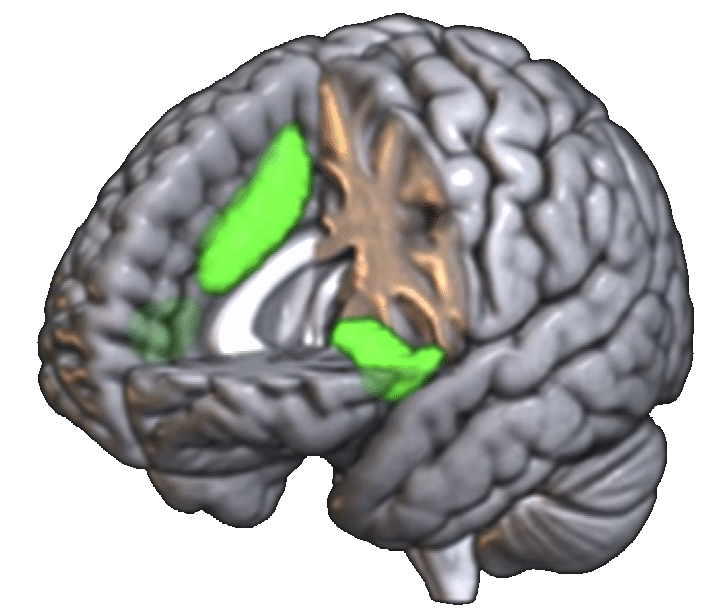
Integrates internal and external salience. The right fronto-insular cortex has been proposed as a causal hub in switching between DMN and CEN.
Key regions: Insula, Anterior Cingulate Cortex (ACC)
Coordinated switching: Menon's model proposes that salience-network hubs help recruit central-executive resources and disengage default-mode activity when demands change. The networks can interact; this is not an either-or switch.
Framework: Menon (2011); switching evidence: Sridharan, Levitin, & Menon (2008)
Two Clinical Presentations, Not Two Fixed Brains
Under- and over-modulation are useful clinical and research models. They describe patterns that may overlap or shift within the same person; they are not scan-based diagnoses and do not dictate one treatment sequence.
Kozlowska, Walker, McLean & Carrive (2015), Harvard Review of Psychiatry
Kozlowska et al. (2015) describe a defense-cascade model with shifting defensive responses. It is a conceptual sequence ~ not a diagnostic conveyor belt ~ and it does not map one-to-one onto PTSD subtypes.
A possible pattern ~ not an individual brain scan
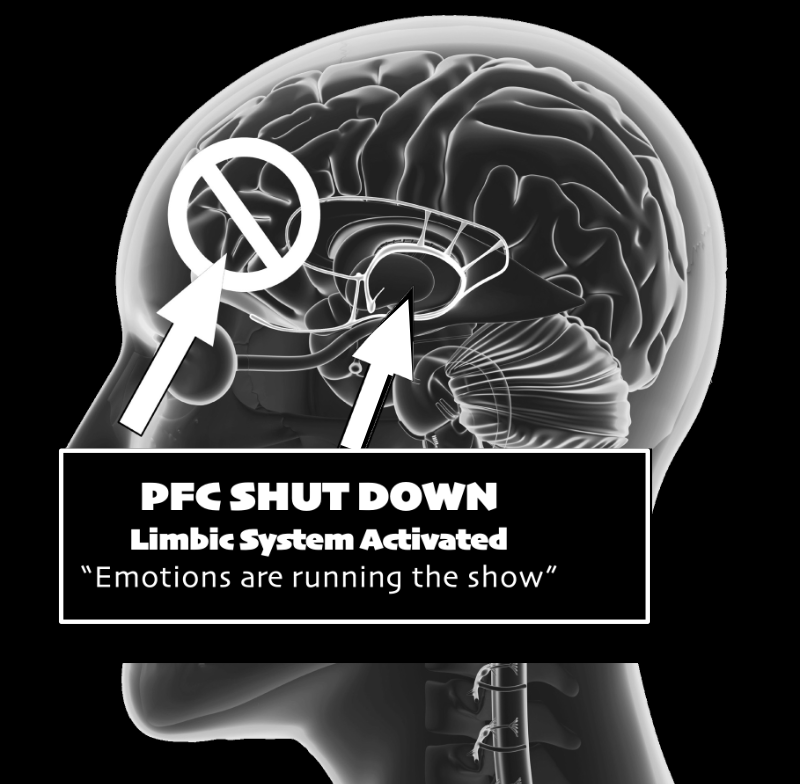
- • May include intrusive memories, hyperarousal, and heightened threat sensitivity
- • Group studies often report altered amygdala–prefrontal function
- • Attention and executive function may be disrupted under threat
- • Autonomic responses vary across people and situations
- • Processing readiness still depends on safety, consent, pacing, and capacity
Defined clinically by depersonalization and/or derealization
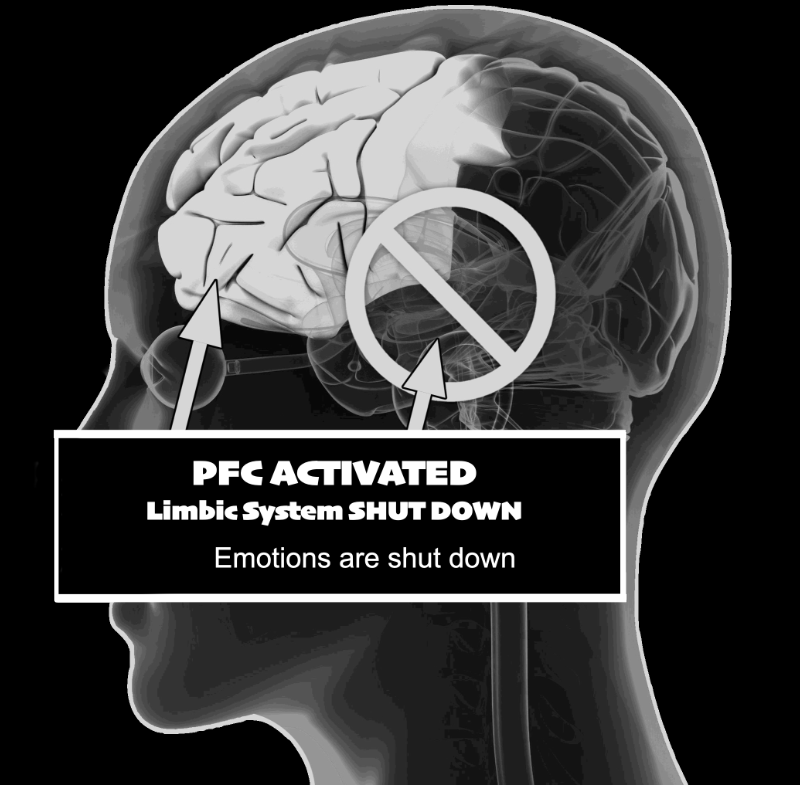
- • May include depersonalization, derealization, numbing, or altered body awareness
- • Neuroimaging findings are group-level and task-dependent
- • Shaw et al. (2023) found hyperconnectivity in one resting-state sample versus healthy controls
- • No uniform “dorsal vagal” biomarker has been established
- • Trauma-focused work may still help when assessment, pacing, and monitoring are individualized
Free education for trauma clinicians. Funded by clinicians.
Structural Dissociation: A Clinical Theory, Not a Brain Map
The Theory of Structural Dissociation (Steele, van der Hart, & Nijenhuis, 2005) offers a clinical language for parts organized around daily functioning and traumatic experience. ANP and EP are theory-based constructs ~ not hemispheres, neural circuits, or DSM/ICD diagnoses.
The diagrams are retained as teaching illustrations. They should not be read as validated neuroimaging maps or as proof that one part “lives” in a particular brain region.
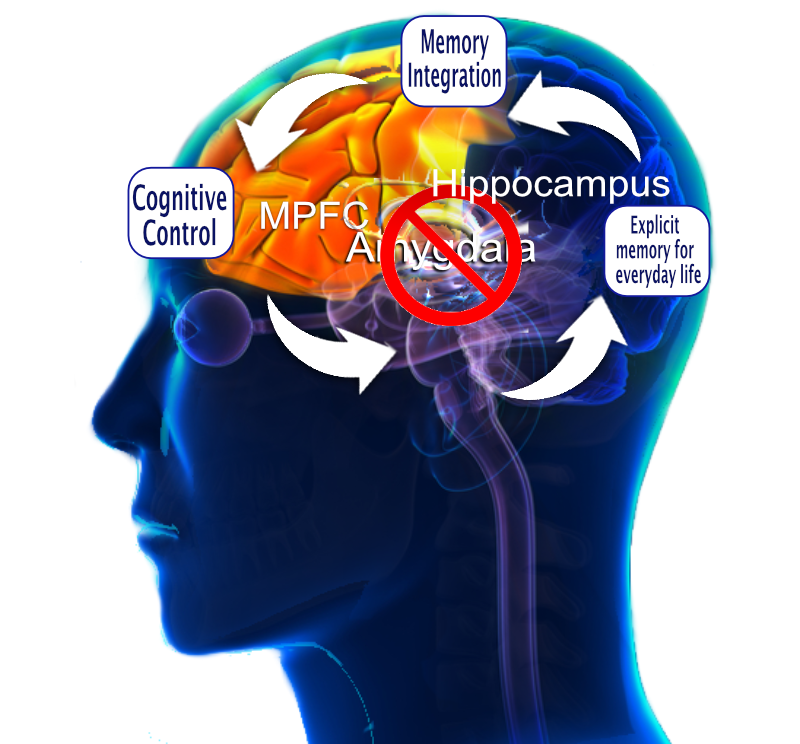
- • Oriented primarily toward daily functioning and avoiding traumatic material
- • May use cognitive control, emotional distance, or over-modulation
- • Can have incomplete access to trauma-related experience
- • Is not synonymous with the left hemisphere, PFC, hippocampus, or CEN
- • Presentation may shift across contexts
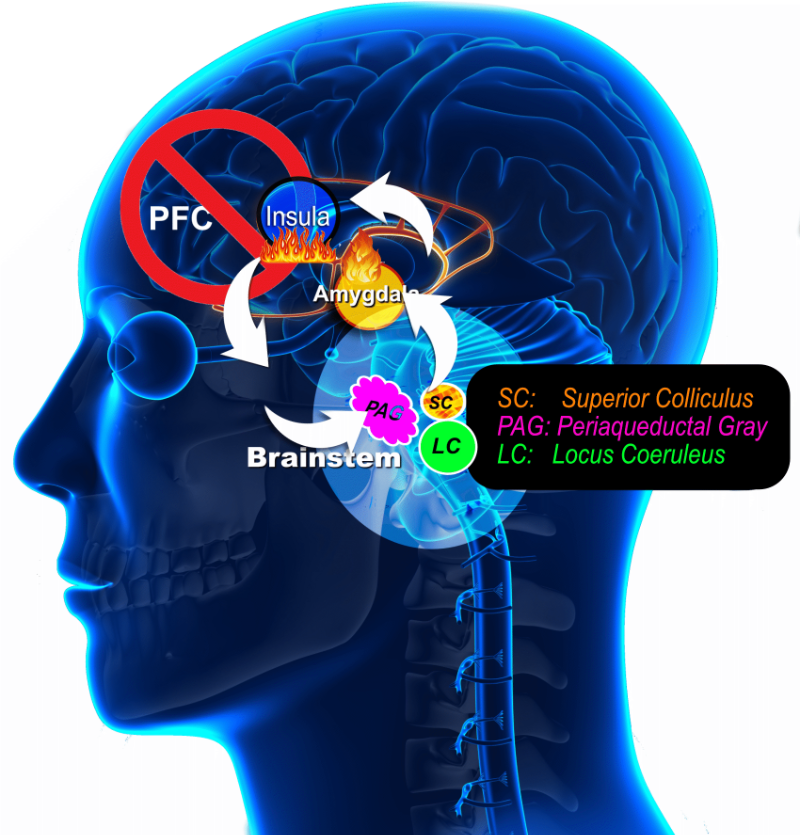
- • Organized around traumatic experience and defensive action
- • May carry vivid sensory, somatic, emotional, or relational material
- • Can present with hyperarousal, hypoarousal, or mixed states
- • Is not synonymous with the right hemisphere, amygdala, insula, or brainstem
- • Presentation may shift across contexts
| Level | Theory’s organization | Clinical caution |
|---|---|---|
| Primary | 1 ANP + 1 EP | Often discussed in relation to single-event trauma; not a diagnostic rule |
| Secondary | 1 ANP + multiple EPs | Often discussed with complex trauma; not equivalent to PTSD’s dissociative subtype |
| Tertiary | Multiple ANPs + multiple EPs | Used by the theory in relation to DID; diagnosis still requires formal criteria |
ICD-11 recognizes Complex PTSD. DSM-5-TR does not use that diagnosis and defines the PTSD dissociative subtype by depersonalization and/or derealization. These categories are not interchangeable.
Interactive Brain Map
Click a region to review what group-level research suggests ~ and what it does not establish about an individual client or a treatment mechanism.
Brain Regions in Trauma Processing
Educational map: regional findings are task- and group-dependent, not individual diagnoses or treatment prescriptions.
Treatment Mechanisms: Established, Preliminary, or Proposed?
Lanius et al. (2015), correctly titled “Restoring large-scale brain networks in PTSD and related disorders: a proposal for neuroscientifically-informed treatment interventions,” is a proposal and review. It does not validate a one-modality/one-network map.
Swipe horizontally to read the full evidence table.
| Intervention or framework | Evidence level | What can be said |
|---|---|---|
| Triple-network model | Research framework | Organizes distributed findings across salience, default-mode, and executive systems; it is not a treatment algorithm. |
| EMDR and Sensorimotor Psychotherapy | Clinical efficacy varies by modality; network mechanism proposed | Lanius et al. discuss these among approaches that may support self-related and regulatory function. Direct unique-network target engagement is not established. |
| Real-time fMRI neurofeedback | Preliminary, protocol-specific mechanistic studies | Nicholson et al. (2018) reported changes during amygdala downregulation in an uncontrolled PTSD sample of 14. Do not generalize to all neurofeedback or “all three networks.” |
| DBR | Early clinical trial evidence; mechanism proposed | A randomized trial supports symptom reduction. Direct evidence that DBR uniquely targets a brainstem-to-insula pathway is absent. |
| SE, IFS, Brainspotting, Gestalt | Modality-specific evidence varies; unique network map unverified | Network language may generate hypotheses. It should not be presented as a demonstrated primary target or mechanism. |
Why This Matters for Treatment
Assess the Client’s Presentation
- ●Track hyperarousal, hypoarousal, depersonalization, derealization, amnesia, and rapid shifts
- ●Assess safety, consent, attention, dual awareness, and the therapeutic relationship
- ●Use screening as one data source ~ not a substitute for formulation
- ●Reassess throughout treatment
Adapt Without Declaring Treatment Impossible
- ●Dissociation may require shorter sets, stronger present orientation, more choice, or slower pacing
- ●Evidence does not support a universal rule that trauma-focused work must wait until dissociation is removed
- ●Some clients need substantial preparation; others can engage safely with concurrent supports
- ●Let response, risk, and capacity ~ not a cartoon brain ~ guide the plan
This is why assessment comes first ~ and continues. The Pre-Session Screening Battery can identify symptoms that deserve follow-up. The Structural Dissociation page explains the theory. And EMDR Deconstructed Chapter 2 discusses protocol adaptations. None of them replaces clinical judgment.
Scientific Context & Resources
Read the references with their evidence level attached. Reviews and theoretical models organize findings; they do not establish individual biomarkers. Neuroimaging differences are group averages. Early mechanism studies do not prove that a named psychotherapy uniquely targets one network or structure.
Verified Citations
- Menon, V. (2011). Large-scale brain networks and psychopathology: a unifying triple network model. Trends in Cognitive Sciences, 15(10), 483–506. https://doi.org/10.1016/j.tics.2011.08.003
- Sridharan, D., Levitin, D. J., & Menon, V. (2008). A critical role for the right fronto-insular cortex in switching between central-executive and default-mode networks. PNAS, 105(34), 12569–12574.
- Lanius, R. A., et al. (2010). Emotion modulation in PTSD: Clinical and neurobiological evidence for a dissociative subtype. American Journal of Psychiatry, 167(6), 640–647.
- Lanius, R. A., et al. (2015). Restoring large-scale brain networks in PTSD and related disorders: a proposal for neuroscientifically-informed treatment interventions. European Journal of Psychotraumatology, 6, 27313.
- Shaw, S. B., et al. (2023). Increased large-scale inter-network connectivity in relation to dissociation in PTSD. Nature Mental Health, 1(10), 711–721.
- Nicholson, A. A., et al. (2018). Intrinsic connectivity network dynamics in PTSD during amygdala downregulation using real-time fMRI neurofeedback: A preliminary analysis. Human Brain Mapping, 39(11), 4258–4275.
- Kozlowska, K., Walker, P., McLean, L., & Carrive, P. (2015). Fear and the defense cascade: Clinical implications and management. Harvard Review of Psychiatry, 23(4), 263–287.
- Steele, K., van der Hart, O., & Nijenhuis, E. R. S. (2005). Phase-oriented treatment of structural dissociation in complex traumatization: Overcoming trauma-related phobias. Journal of Trauma & Dissociation, 6(3), 11–53.
- Beutler, S., et al. (2022). Heart rate variability and skin conductance during autobiographical memory recall in trauma-exposed individuals with and without dissociation. European Journal of Psychotraumatology, 13(2), 2132599.
- Hoeboer, C. M., et al. (2020). Impact of dissociation on the effectiveness of psychotherapy for PTSD: meta-analysis. BJPsych Open, 6(3), e53.
- Zoet, H. A., et al. (2018). Presence of the dissociative subtype of PTSD does not moderate the outcome of intensive trauma-focused treatment for PTSD. European Journal of Psychotraumatology, 9(1), 1468707.
- VA/DoD. (2023). Clinical Practice Guideline for Management of Posttraumatic Stress Disorder and Acute Stress Disorder: Provider Summary.
- Kearney, B. E., et al. (2023). A randomized controlled trial of Deep Brain Reorienting: a neuroscientifically guided treatment for post-traumatic stress disorder. European Journal of Psychotraumatology, 14(2), 2240691.